 Campbell Steven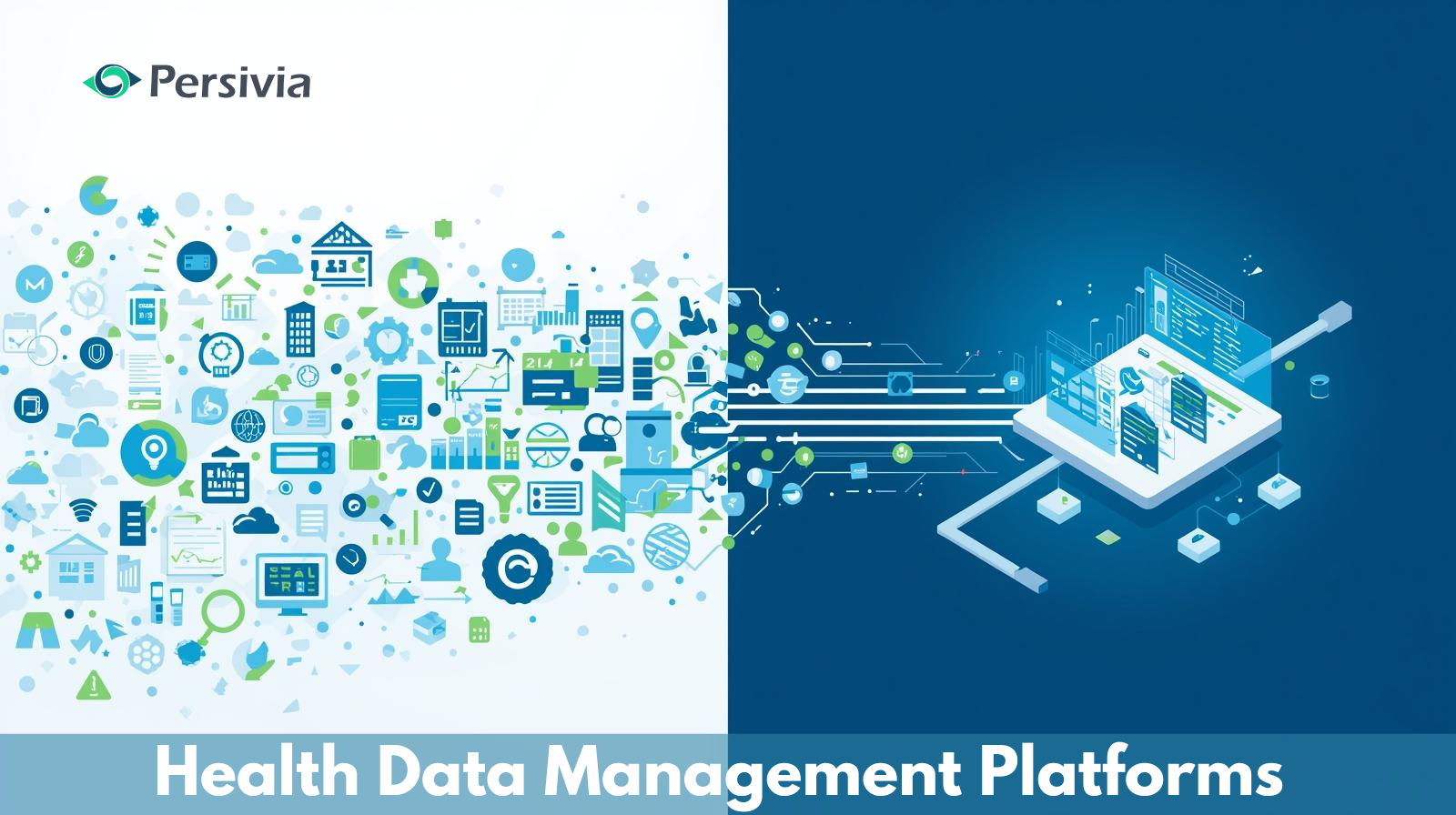
Thousands of sources of electronic health records, medical devices, insurance claims, lab results, and patient-reported data are overwhelming healthcare organizations. Gathering data is easier than it used to be, but managing it at scale remains a major challenge. The actual issue is how to sort it all out and convert it into insights that directly support clinical decision-making and care coordination. This is the issue that Health Data Management Platforms address, as they consolidate all that information that is scattered together in one platform where it can be analyzed, comprehended, and utilized to enhance care.
Healthcare organizations need more than basic data storage. The requirements of providers include systems capable of integrating data from hundreds of diverse clinical and administrative sources, identifying patterns that humans can overlook, and providing the appropriate insights at the right time when working with the patient. The optimal HDMPs do not merely store information but convert it into actionable intelligence, which assists clinicians in making smarter decisions faster. Such platforms are transforming the manner in which healthcare organizations undertake all aspects of chronic disease management to population health programs.
What are Health Data Management Platforms?
HDMPs are specialized software systems designed to collect, organize, and analyze healthcare information from multiple sources. They create a more comprehensive, longitudinal view of each patient by combining clinical records, insurance data, social factors, and real-time monitoring information.
These platforms process the technical aspects of healthcare data to allow the providers to attend to the patients. They make sure that there are uninterrupted information exchanges among hospitals, clinics, labs, and insurance companies and that privacy is not violated.
Key functions include:
- Pulling data from electronic health records, claims systems, and medical devices
- Converting different data formats into a unified structure
- Identifying care gaps and quality improvement opportunities
- Delivering insights directly into clinical workflows
- Supporting compliance with healthcare regulations
Why Healthcare Organizations Need Robust Data Capabilities
Healthcare data is messy. One patient may have records spread across multiple hospitals, specialists, pharmacies, and labs. Providers struggle to make informed decisions when data is fragmented and poorly managed.
The consequences of poor data management are real:
- Duplicate tests waste money and expose patients to unnecessary procedures
- Missing medication histories lead to dangerous drug interactions
- Incomplete records delay diagnosis and treatment
- Care coordination breaks down when specialists can’t access relevant information
Strong data capabilities fix these problems by creating a complete, accurate view of each patient’s health journey.
The 5 Essential Capabilities Every HDMP Must Have
1. Comprehensive Data Acquisition and Integration
Data acquisition refers to the process of drawing data from all systems that interface with patient care and integrating them into one record.
Modern health data management platforms connect to thousands of different data sources. This includes:
- Electronic health records from hospitals and clinics
- Insurance claims and billing systems
- Laboratory and diagnostic imaging systems
- Pharmacy and medication records
- Wearable devices and remote monitoring tools
- Social determinants of health databases
- Patient-reported outcomes and surveys
Why broad data acquisition matters:
The platform must support the technical standards used across healthcare systems. There are those that utilize Epic, and then there are those that utilize Cerner, and even the small practices may utilize entirely different systems. An effective HDMP extracts data from all of them automatically.
Real interoperability means supporting:
- HL7 and FHIR standards for clinical data exchange
- X12 formats for insurance claims
- LOINC codes for lab results
- SNOMED CT for clinical terminology
- ICD-10 for diagnosis coding
The platform is expected to work with both structured (such as lab values) and unstructured data (such as doctors’ notes). NLP extracts structured clinical concepts from free-text documentation, such as diagnoses, symptoms, and care plans.
Integration without disruption:
Health organizations cannot afford downtime. Integration of data should take place at the back end without disrupting clinical operations. The most effective platforms have automated pipelines that constantly draw the new information when it becomes accessible to update patient records in real-time.
| Data Source Type | Examples | Update Frequency |
| Clinical Systems | EHRs, EMRs | Real-time |
| Claims Data | Insurance, billing | Daily |
| Lab Results | Blood work, imaging | Immediate |
| Patient Devices | Wearables, monitors | Continuous |
| Social Data | Housing, transportation | Monthly |
2. Advanced Data Fabric Architecture
A data fabric is the underlying technical framework that automatically connects, organizes, and manages healthcare data across all systems and locations.
Traditional data warehouses stack information in rigid structures. Data fabrics work differently. They create a flexible network that knows how different pieces of information relate to each other. When a doctor needs patient information, the fabric automatically finds it, regardless of where it lives.
Core components of an effective data fabric:
Pre-built metadata and semantic layers
The platform understands what each data element means. It is known that “BP” in one system and “blood pressure” in another refer to the same measurement. This semantic understanding eliminates the need for manual data mapping.
Automated data quality management
The fabric constantly checks for:
- Duplicate records that need merging
- Inconsistent values that require correction
- Missing information that affects care quality
- Outdated data that should be refreshed
Dynamic longitudinal patient records
The platform is dynamic and creates moving documents that change with new information rather than producing a snapshot of the situation. All lab results, medication changes, and clinical interactions are updated in the story of a patient.
The strategy shifts the focus from static data storage to continuous data management and enrichment. The system gains knowledge on what has been repeated in the data and proposes improved methods of arranging and presenting data.
3. AI-Powered Data Enrichment and Intelligence
AI can analyze raw data to provide predictive and actionable insights that support proactive care decisions by detecting trends, making predictions, and pointing to possible areas of intervention.
Healthcare produces data that is too much data to be handled manually. This is where AI comes in because it examines millions of data points to identify trends and risks, which could otherwise not be identified.
Machine learning applications:
- Predictive analytics: Identifies patients at high risk for hospital readmission, disease progression, or medication non-compliance
- Natural language processing: Extracts structured information from doctors’ notes, discharge summaries, and radiology reports
- Pattern recognition: Finds similar patient cases to suggest evidence-based treatment approaches
Why stable, non-hallucinating AI models matter:
Not all AI is created equal. Health care has to be absolutely accurate since errors can be detrimental to patients. The most trusted HDMPs rely on models trained on proven clinical data and not general-purpose language models that may produce information that sounds plausible but is incorrect.
Key AI capabilities include:
- Gap identification that spots missing preventive screenings
- Care opportunity detection that flags patients overdue for follow-up
- Risk stratification that prioritizes patients needing immediate attention
- Clinical decision support that suggests evidence-based interventions
The AI is continuously running in the background, and it analyzes all the patient records to formulate alerts and recommendations. Such insights become a part of clinical workflows and, therefore, the providers get relevant information whenever they need it.
4. FHIR-Enabled Analytics and Workflow Integration
FHIR (Fast Healthcare Interoperability Resources) is a widely adopted interoperability standard for exchanging healthcare data electronically. It enables other systems to exchange data with ease.
Analytics lose value when they are confined to separate dashboards outside clinical workflows. The platform should feed insights into the current workflows into the EHR screen that doctors already access, the mobile app nurses have on hand, or the coordinators of the care management system run.
Real-time workflow integration:
The best platforms deliver three types of insights:
Evidence-based recommendations
The system compares the conditions of patients with the clinical guidelines and research evidence. As a clinician prepares a diabetic patient for an eye exam, the notification will show in the workflow, allowing that clinician to book an eye exam with just one click.
Machine learning predictions
Artificial intelligence identifies patients with a high risk of complications. A high predictive score of a patient with multiple risk factors may activate proactive outreach.
AI-generated action items
The platform doesn’t just identify problems. It suggests specific actions. Instead of “patient has uncontrolled hypertension,” the system recommends “schedule medication review and blood pressure recheck in 2 weeks.”
Benefits of workflow-embedded insights:
- Reduces the time providers spend searching for information
- Ensures critical alerts aren’t missed
- Supports clinical decision-making at the point of care
- Improves care coordination across the healthcare team
These abilities are important since the medical workers are already strained. It is not possible to ask them to log into different systems to check analytics. Effective platforms find clinicians in the locations where they exist.
5. Enterprise-Grade Data Management and Governance
Data governance is a concept that provides the accuracy, safety, confidentiality, and regulatory compliance of healthcare information during all stages of its life cycle.
Data on healthcare is very sensitive. Any breach can potentially reveal the documentation of thousands of patients and be in violation of HIPAA regulations. Compliant and robust health data management platforms develop security and compliance at all layers.
Essential governance capabilities:
Privacy and security controls
- Role-based access ensures users only see the data they need
- Encryption protects information both in storage and transit
- Audit trails track every time someone accesses patient records
- Automated de-identification removes personal identifiers for research
Data quality assurance
The platform continuously monitors data accuracy through:
- Automated validation rules that catch errors at entry
- Duplicate detection and resolution
- Completeness checks that flag missing critical information
- Consistency verification across multiple data sources
Regulatory compliance support
Healthcare operates under strict regulations. The platform must support:
- HIPAA privacy and security requirements
- Medicare and Medicaid quality reporting
- Meaningful Use and Promoting Interoperability criteria
- State-specific healthcare data laws
Data lineage and transparency
Organizations need to know where data came from and how it’s been modified. The platform tracks:
- Source of each data element
- Transformations applied during processing
- Who accessed or changed information
- When updates occurred
Scalability for growth
As organizations expand, data volumes multiply. The platform must handle:
- Growing numbers of patients and providers
- Additional facilities and care sites
- New data sources and integration requirements
- Increasing analytics and reporting demands
Proper governance protects patients, supports quality improvement, and reduces organizational risk.
How These Capabilities Work Together
These five capabilities don’t operate in isolation. They form an integrated system where each component strengthens the others.
The information fabric offers the basis whereby information flows well through systems. With artificial intelligence, this data is enhanced with intelligence and patterns, and opportunities are discovered. These insights are provided as FHIR-enabled analytics that are implemented within clinical processes to take action.
Example workflow:
A patient with diabetes visits her primary care doctor. The HDMP has already:
- Pulled her latest lab results from three different facilities
- Identified gaps in her preventive care
- Used AI to predict her risk of complications
- Generated recommendations based on clinical guidelines
These insights are automatically brought out when the doctor opens her chart. The system recommends ordering an overdue eye check and revising her medication depending on the current glucose patterns. The physician can do this by just clicking. It is an inseparable system that helps in turning data management into a competitive advantage.
Bottom Line
Modern healthcare delivery increasingly depends on health data management platforms to turn fragmented data into usable insights, for example, enhancing patient outcomes. The five essential capabilities, extensive data collection, advanced data architecture, AI-based intelligence, FHIR-based workflow integration, and enterprise-level governance, facilitate coordinated care, value-based model support, as well as optimized operations.
Persivia CareSpace® provides all five capabilities, linking to more than 3,000 data sources and providing AI-driven insights into clinical workflows. Its FHIR-based platform assists healthcare organizations in developing dynamic patient records, enhancing care coordination, and managing population health.
FAQs
- What is the main purpose of health data management platforms?
The primary purpose of HDMPs is to collect, integrate, and analyze healthcare data from multiple sources, creating a complete patient view. They transform scattered information into actionable insights that help providers deliver coordinated, high-quality care.
- Are health data management platforms HIPAA compliant?
Yes, reputable HDMPs are designed with HIPAA compliance at their core, including encryption, access controls, audit trails, and privacy safeguards to protect patient information throughout its lifecycle.
- Can HDMPs integrate with existing EHR systems?
Yes, modern HDMPs connect seamlessly with major EHR systems such as Epic and Cerner, as well as smaller vendors. They use standard healthcare protocols like HL7 and FHIR to exchange data without disrupting existing workflows.
- How do AI capabilities improve clinical decision-making?
AI analyzes patient data to identify risks, predict outcomes, and suggest evidence-based interventions. These insights appear directly in clinical workflows, enabling providers to make faster, more informed decisions at the point of care.
- What makes a data fabric different from a traditional data warehouse?
A data fabric creates flexible connections between data sources and actively manages relationships, providing agile access to information across the healthcare ecosystem. In contrast, traditional data warehouses store data in rigid structures and require manual processing to combine information.