 Campbell Steven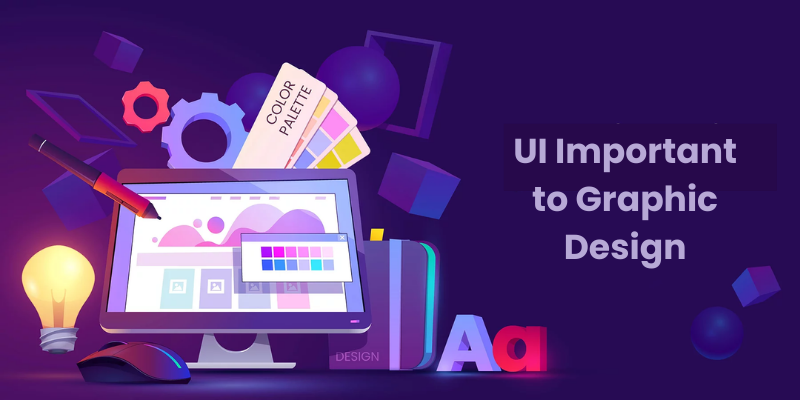
Graphic design has always been about more than just aesthetics; it’s about communication. The colors, fonts, and layouts we see are carefully chosen to convey meaning and connect with an audience. In today’s digital world, however, graphic design is inseparable from another crucial element: User Interface (UI). A well-crafted UI bridges the gap between creativity and usability, ensuring that design not only looks appealing but also works seamlessly for its intended audience. This blog explores why is UI important to Graphic Design.
The Relationship Between UI and Graphic Design
Graphic design traditionally focused on creating visual elements, logos, posters, brochures, and branding materials. But as technology advanced, design began to expand into websites, mobile apps, and interactive products. Here, UI became the bridge between design and functionality.
- Graphic design provides the visual appeal.
- UI ensures the ease of interaction.
Together, they create designs that are both beautiful and practical, making them essential for any successful digital product. For those looking to enter the creative field, enrolling in Graphic Design Courses in Chennai is the perfect way to build your skills.
Enhancing User Experience
The most crucial reason UI is central to graphic design is its impact on user experience (UX). Even the most visually striking design can fail if users struggle to guide or interact with it.
- A well-designed UI ensures clarity in navigation.
- Buttons, icons, and typography guide users intuitively.
- Balanced layouts reduce confusion and frustration.
For example, a visually pleasing website that loads slowly or has confusing menus will drive users away. UI ensures design not only looks good but delivers a smooth, enjoyable experience.
Creating Consistency and Brand Identity
UI plays a massive role in maintaining consistency, which is key to a strong brand identity. Graphic design sets the tone with color palettes, logos, and typography, while UI applies these elements consistently across digital platforms.
- Consistency builds trust when users see the same style and flow across websites, apps, and digital products; they feel confident in the brand.
- UI guidelines ensure that every button, text box, or menu reflects the same design language.
Think of platforms like Apple or Google. Their consistent UI design not only reinforces brand identity but also sets them apart in competitive markets.
Guiding User Behavior
Good design doesn’t just look nice; it subtly influences how users behave. UI elements such as call-to-action buttons, scroll animations, or hover effects guide users toward specific actions.
- Color psychology in UI design influences decisions (e.g., red for urgency, green for confirmation).
- Visual hierarchy directs attention to important areas.
- Interactive feedback (such as button color changes) assures users that their actions have been registered.
Here, graphic design and UI work together to create intentional and rewarding user journeys.
The Role of Accessibility in UI and Graphic Design
Another critical reason UI is essential in graphic design is accessibility. A visually stunning design is meaningless if it excludes certain users. UI ensures that designs are inclusive and functional for everyone.
- Proper contrast ratios make text readable for people with vision impairments.
- Responsive design ensures layouts adapt across devices and screen sizes.
- Clear labeling helps users with cognitive difficulties understand navigation easily.
Accessibility is no longer optional; it’s a core aspect of modern design, where UI ensures beauty is also inclusive.
Increasing Engagement Through Interactivity
One of the most significant advantages of integrating UI into graphic design is interactivity. Unlike static visuals, UI-driven designs create two-way communication with users.
- Micro-interactions, like icons animating when clicked, provide feedback.
- Sliders, drop-downs, and hover effects keep users engaged.
- Smooth transitions between pages enhance flow.
This level of interactivity transforms graphic design into an experience, rather than just a visual. The result is higher engagement and longer user retention. Start your career with a UI UX Designer Course in Chennai to learn user-focused design skills and secure opportunities in top tech companies.
UI in the Era of Mobile-First Design
With the majority of content being accessed via smartphones, the role of UI has never been more crucial. Mobile screens offer limited space, so every graphic design decision must strike a balance between aesthetics and usability.
- Simple layouts ensure readability.
- Touch-friendly buttons improve navigation.
- Minimalistic design avoids clutter.
Without proper UI, even the most beautiful graphic design can fail on mobile. Today, UI is not an add-on but an essential for effective graphic design.
The Future of Graphic Design with UI
Looking ahead, the role of UI in graphic design will only grow stronger. Emerging technologies, such as AR/VR, voice-based interfaces, and AI-driven personalization, all rely on effective UI to bring designs to life.
- AR/VR UI design requires merging visuals with immersive experiences.
- Voice interfaces depend on visual feedback for clarity.
- AI personalization uses UI to deliver unique experiences to each user.
Graphic design in the future won’t just be about visuals; it will be about creating dynamic, user-centered environments powered by innovative UI.
So, why is UI important to graphic design? Because it transforms design from static visuals into interactive, user-friendly experiences. UI enhances usability, builds brand consistency, ensures accessibility, guides user behavior, and adapts designs to modern devices. In a digital-first world, graphic design and UI are inseparable partners; one provides the beauty, the other delivers functionality.