 Campbell Steven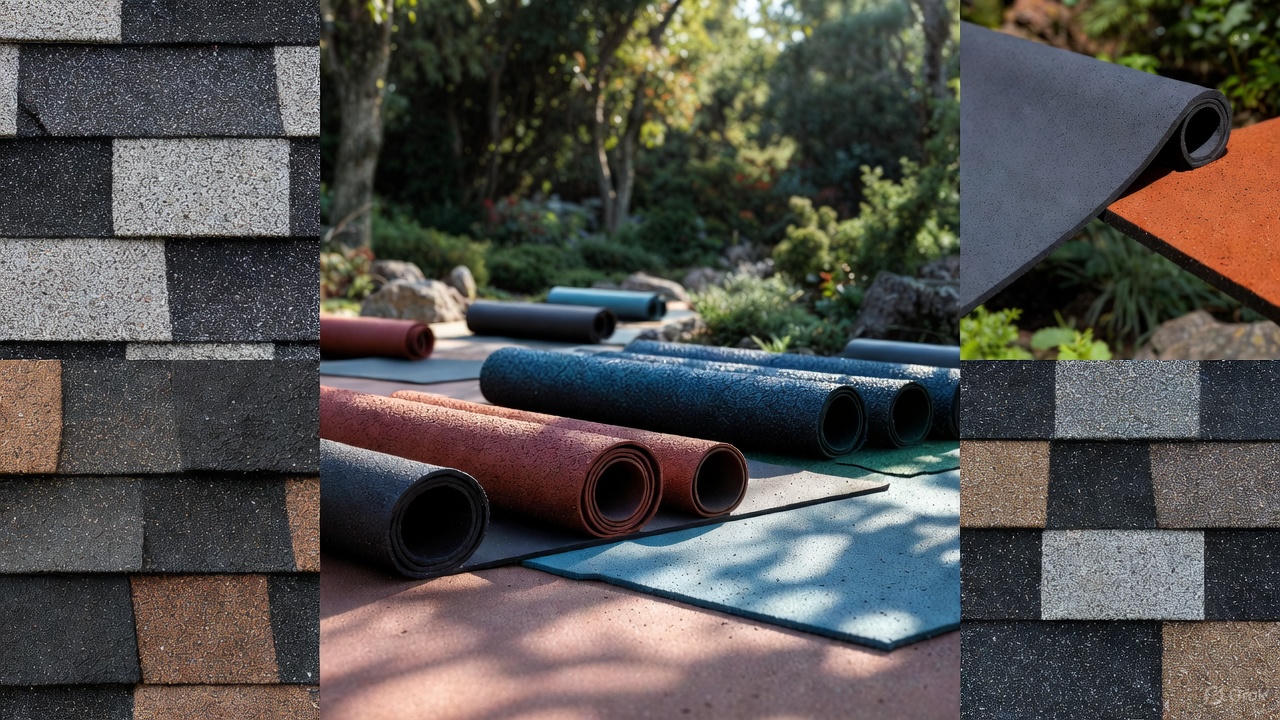
If you’ve spent any time around flat or low-slope roofs, you’ve heard the term rubber roofing thrown around casually.
I have too—on job sites, in supply yards, and during long conversations with homeowners who just want a roof that doesn’t leak again.
This guide breaks down the types of rubber roofing based on real-world performance, not brochure promises.
I’ll also cover the much-searched comparison PVC vs TPO vs EPDM RV roof, because that debate comes up constantly in practice.
What Is Rubber Roofing, Really?
Rubber roofing is a flexible membrane system designed primarily for flat or low-slope roofs.
Unlike shingles, it’s installed in large sheets to reduce seams and failure points.
I’ve personally seen rubber roofs outlast asphalt by decades when installed correctly.
But I’ve also torn off poorly chosen membranes that failed in under ten years.
Material choice matters more than brand names.
The Three Main Types of Rubber Roofing
In real-world roofing, three materials dominate the conversation.
Each behaves differently once exposed to sun, movement, and standing water.
Understanding those differences saves money later.
1. EPDM Rubber Roofing
EPDM is what most people mean when they say “rubber roof.”
It’s a synthetic rubber membrane that’s been around since the 1960s.
I’ve installed EPDM on warehouses, garages, and residential additions.
When maintained, it’s shockingly forgiving.
Why EPDM works well:
-
Excellent UV resistance
-
Handles thermal expansion smoothly
-
Easy to repair with patches
Where EPDM struggles:
-
Black surface absorbs heat
-
Adhesive failures if installed in cold weather
-
Seams rely heavily on installer skill
For budget-conscious homeowners, EPDM is often the safest bet.
For RVs? It depends—more on that shortly.
2. TPO Rubber Roofing
TPO is technically not rubber, but it’s lumped into the category constantly.
It’s a heat-welded membrane with a white reflective surface.
I’ve seen TPO perform incredibly well—and fail spectacularly.
The difference usually comes down to formulation quality and weld consistency.
Why builders like TPO:
-
Reflects heat effectively
-
Welded seams are strong when done right
-
Competitive pricing
Common TPO issues:
-
Early-generation formulas cracked prematurely
-
Poor welds lead to hidden leaks
-
Thickness varies by manufacturer
On commercial projects, I specify TPO carefully.
For RV roofs, it’s popular but not always ideal.
3. PVC Rubber Roofing
PVC is the premium option.
It’s chemically resistant, flexible, and extremely durable.
I’ve used PVC on restaurants and industrial buildings where grease and chemicals destroy other membranes.
In those environments, PVC earns its higher price.
Strengths of PVC roofing:
-
Exceptional seam strength
-
Resists oils and chemicals
-
Long service life
Drawbacks to consider:
-
Higher upfront cost
-
Plasticizers can migrate over decades
-
Requires experienced installers
PVC isn’t overkill everywhere—but when conditions are harsh, it’s unbeatable.
PVC vs TPO vs EPDM RV Roof: Real Comparison
This question comes up weekly from RV owners.
And the honest answer is: usage matters more than material hype.
I’ve worked on RV roofs that travel constantly and ones that sit parked for years.
They age very differently.
EPDM on RV Roofs
-
Flexible and forgiving on movement
-
Easier DIY repairs
-
Needs regular cleaning to prevent streaking
TPO on RV Roofs
-
Reflects heat well in hot climates
-
Welded seams reduce peel risk
-
Quality varies widely by manufacturer
PVC on RV Roofs
-
Rare but extremely durable
-
Best for full-time RV living
-
Higher repair costs if damaged
If you move often and DIY repairs, EPDM still wins.
If heat reduction matters most, TPO edges ahead.
Installation Quality Matters More Than Material
This is where experience changes perspective.
I’ve seen premium PVC fail because of sloppy prep.
And I’ve seen basic EPDM roofs still watertight after 25 years.
Membranes don’t fail—installations do.
Key factors that decide lifespan:
-
Substrate preparation
-
Seam treatment
-
Drainage design
-
Edge detailing
Skipping any one of those shortens roof life dramatically.
Maintenance: The Silent Cost Factor
Rubber roofing is low-maintenance, not no-maintenance.
That distinction matters.
I recommend inspections twice a year.
Especially after extreme heat or freezing cycles.
Simple maintenance tasks:
-
Clear debris from drains
-
Check seams and flashings
-
Address punctures immediately
Five minutes of prevention often saves thousands later.
Which Type of Rubber Roofing Should You Choose?
Here’s my practical advice after years in the field.
Choose EPDM if:
-
Budget matters
-
Roof traffic is minimal
-
You want easy repairs
Choose TPO if:
-
Energy efficiency is a priority
-
You trust the installer’s weld quality
-
Climate is consistently hot
Choose PVC if:
-
Roof faces chemicals or grease
-
Longevity outweighs upfront cost
-
You want maximum seam strength
No membrane is perfect everywhere.
The best roof is the one matched to its environment.